
ADHD ORGANIZING TIPS
My ADHD Journey: From Daily Struggle to Professional Organizer
This post may contain affiliate links. I may receive a commission, at no cost to you, when you choose to use the links provided. See my privacy policy for more information.
The Three Stages of My ADHD Journey
How I Went From Struggling Mess to Professional Organizer
There really have been three distinct stages of my ADHD journey: My in-the-dark early years of struggle and frustration, the middle years of diagnosis and acceptance, and the later years of learning to compensate and even harness my ADHD to help myself and eventually others.
My ADHD Journey – Stage One
Like many women, I didn’t even know I had ADHD until I was in my mid-40s. I know now that very likely, my mother had it too. It was never diagnosed, but thinking back, she showed all the classic signs.
My In the Dark Early Years
My childhood was hard…really hard. Mostly because I carried an inferiority complex around for most of my school years. When I compared myself to others, I rarely measured up.
I felt like I was always behind in whatever we were learning or doing; it was a constant struggle to catch up. Since I had no idea that I had ADHD, the only logical conclusion in my mind was that I just wasn’t as smart as the other kids.
My grades were poor, and they even considered holding me back one year. Instead, I was forced to go to summer school for math. That will work…make a child with way too much energy and a lack of ability to focus sit at a desk and do math all summer long.😑 Anyone who knows me also knows how much I HATE doing any math. That was a terrible summer.
In class, I would try to listen to what the teacher was instructing us to do. Unfortunately, my brain would get bored, and the daydreaming would start. I repeatedly annoyed whoever got stuck sitting next to me because every time we started a new assignment, I’d have to poke my neighbor and ask, “What are we supposed to be doing?”
It would have been immensely helpful if somebody had told me back then that I had ADHD and that my brain worked a little differently. My self-confidence might have fared a little better. As it was, I felt so inferior to others that I became painfully shy. I didn’t say much, out of fear of drawing attention to myself and saying or doing something stupid.
I didn’t get into any trouble or cause problems; instead, I sat in the back of class and became invisible – other than the occasional poking of my neighbor.
For the most part, my younger years were a mess of confusion, frustration, failure, and isolation. The executive functions affected the most by my flavor of ADHD were working memory, maintaining sustained attention, and, believe it or not…planning and organizing.
I was extremely forgetful and easily distracted. I became flustered and overwhelmed frequently. Attention to detail was an issue for me as well because I was impatient (another common ADHD trait). I was always in a hurry to get done.

My ADHD Journey – Stage Two
At some point in my life, I picked up a book that listed many of the characteristics and symptoms of someone with ADHD. As I read down the list, I was shocked to find that it not only listed many of my challenges, but also described much of my personality to a tee. How was my personality so in line with the characteristics of someone with ADHD? And that’s when light started to dawn.
Diagnosis, Validation, and Acceptance
Shortly after that, I went to the doctor, was tested, and for once, I passed a test with flying colors. It was official, I had ADHD.
I know that for some, this is a hard diagnosis to accept. But for me, since I always knew that there was something “wrong” with me, having this validation was like a huge weight being lifted off of me. Finally, there was a reason behind my challenges and differences.
The next step for me was acceptance. I had spent most of my life beating myself up every time I screwed up. Trying to change myself, fit in, and just be normal.
For example, I would try really hard not to forget something important, then I’d forget it anyway. I’d follow this up with a strong bout of self-loathing. It was a vicious cycle I had developed for myself, and I retaliated against my own brain again and again.
But at some point, knowing and accepting that this is just how my brain works because I have ADHD allowed me to stop the cycle. To accept myself the way I am. That was when I finally began to pivot, and I broke out of that circular pattern. Instead of trying to make myself remember things, I accepted that I would likely forget.
Then I stopped setting myself up to fail. In other words, I stopped even giving myself the chance to forget. I started adding little hacks, via visual reminders that would trigger my brain. Relying on visual cues became a tool I used often and still do.
I learned to put things in front of the exit door where I literally would have to trip over something to forget it. Or I would place projects that needed to be worked on in a visible location to remind myself to do them.
I also gave myself little never-to-be-broken rules like…never lay your phone down in a public bathroom EVER, not for any reason. Once I started leaning into how my brain works instead of trying to fight against it, things started going better for me, and I stopped sabotaging myself.
Our Brains are Like Racecars
I once heard that our ADHD brains are like high-energy, supercharged racecars. But because of this, it can be super hard at first to learn to drive our crazy fast brains.
We are forced through a gauntlet of unpredictable swerving, near crashes, and frenetic driving before we master the road. I love this analogy because it beautifully mirrors the chaotic early years of my life. The older I get, the better I get at driving my fast brain.
The upside is that this seemingly endless amount of energy and enthusiasm (for the things we are interested in) can also be our ADHD superpower once we learn to harness it and use it to our advantage.

My ADHD Journey – Stage Three
Accepting my unique brain as it is, rather than trying to change it, was key for me. These tweaks that I made to my routine are just one example of how I started figuring out how to compensate. I also learned many other organizing hacks, many of which are infused throughout most of my blog posts related to ADHD and organizing. Forming and sticking to helpful routines and habits like placing my purse and car keys in the same place every day has also helped me make significant progress.
Learning to Compensate, Harness My ADHD, and Eventually Help Others
I started to read books to learn as much as I could about my diagnosis. The more I understood about the dynamics of ADHD, the better I got at developing workarounds and coping skills. Educating myself has been a key factor in helping me compensate, and I highly recommend it to anyone with ADHD because the more you know, the more you grow.
ADHD is Awesome, by Penn and Kim Holderness, Organizing Solutions For People with ADHD by Susan Pinsky, and Taking Charge of Adult ADHD by Russell Barkley, PhD, are some of my favorites.
Another Golden Rule I Live By: Keep it Simple
Because my working memory is impaired, I get flustered very easily when too much is thrown at me at one time. Whereas some people can juggle 3 balls at one time comfortably, I need to stick to 2. I have accepted this as well. Keeping my home and schedule simple is a life hack that has been monumental for me. Simplicity helps me keep all my ducks in a row and avoid overwhelm.
So as you can see, my intense need for structure and simplicity actually stems from my ADHD—it’s just how my unique brain thrives. My greatest challenges and my greatest gifts are deeply intertwined, shaping exactly who I am.
When I first became a professional organizer, knowing how much neurodivergent brains can struggle with order, I felt like an absolute fraud, so I mostly kept my diagnosis to myself.
I felt insecure about this until I discovered that there are other successful organizers who navigate the same challenges.
Now, I fully embrace my diagnosis. By sharing the personal coping strategies that saved my own sanity, I’m able to truly relate to my clients and empower them to embrace their own unique brains, too.
My challenges and my gifts are two sides of the same coin. Today, I don’t just manage my ADHD; I celebrate it. Using the lived-in tools I developed for myself, I get to guide others toward their own breakthroughs with genuine empathy and strategies that work.
Conclusion
If you are sitting amid the chaos and/or clutter right now, feeling overwhelmed and wondering why your brain won’t just “cooperate,” please hear me: you are not broken. You never have been.
Your brain is simply speaking a different language, and you just haven’t found the right translation yet. Organization isn’t about forcing yourself into a rigid, traditional box; it’s about building a world that supports the beautiful, vibrant way you think.
Give yourself some grace today. You are entirely capable of creating a peaceful space—not by fighting with yourself, but by finally learning to understand how your unique brain works, so that you can accept and lean into it.


About Laura
I am a Southern California turned small town, Midwest Mom. I am wife to Bruce and mom to my three girls.
Back when I first started my organizing journey in 2013, I had what I thought of as a dirty little secret. I have ADHD and although I am organized, and enjoy the process of sorting, and tidying. I knew that there were many others with ADHD who really struggled with staying organized. I had a case of imposter syndrome and mostly kept the fact that I had ADHD to myself. That is until I learned that there are other successful professional organizers who have also learned to compensate for their ADHD.
I eventually realized that my need for order and simplicity actually stems from having ADHD as a way to compensate for my short attention span. So my gifts and my challenges are all ironically tied together to create who I am, and I am able to relate to and help others as a result of this coping method that I have developed for myself.
I help women and moms with ADHD, but I also help those who struggle with clutter without having ADHD. Because simplicity and less clutter are always at the heart of staying organized, there is much overlap when it comes to finding solutions to clutter and disorganization.
I am dedicated to keeping my life as simple as possible and to helping others do the same by teaching them how to declutter their homes, simplify their lives, and manage their busy families better.
I hold a BA in Psychology and a CE (Coaching Essentials) Certification
Overwhelmed With Clutter? Get My Free Decluttering Kick-Start Kit and Start Making Progress Today!

Want Room-By-Room Guidance with Decluttering and Organizing Your Home?
If the state of your home is making your home life chaotic…if you are tired of being exhausted and overwhelmed. There is an easier path. Find out how decluttering your home, room by room can free you from forever feeling like you’re one step behind.
Get support from me just as if I were working there with you in your home.

Still Feeling Stuck?
Schedule a coaching call, virtual organizing session, or home assessment with me and get the insight, education, and inspiration you need to move forward


Create the organized and supportive home you have always wanted
you may also like

7 Executive Functioning Skills Affected by ADHD (& How to Overcome Them)
The 7 Executive functions are cognitive processes that help us plan, organize, initiate tasks, manage time, stay focused, regulate emotions, and more.
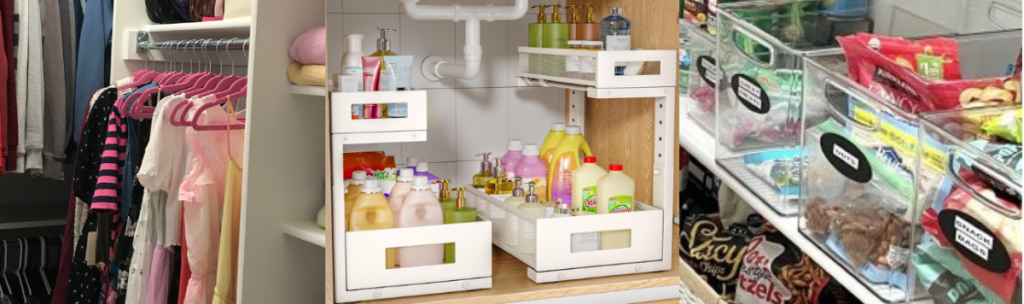
Best Organization Tools: My Favorite Products & Some to Avoid
Having organized the homes of hundreds of clients over the years, I know which home organizing products truly work and which ones to avoid. This post highlights the most functional products I consistently use and trust.

How to Declutter Your Wardrobe (And Skip the Seasonal Switch!)
By decluttering consistently, you will save yourself an enormous amount of time and energy by not having to rummage through seasonal clothing and move it in and out of your bedroom every time a new season rolls around.
0 Comments