
Decluttering | Mindfulness
What is Your Clutter Trying to Tell You? Uncovering Hidden Truths
What is Your Clutter Trying to Tell You About Yourself?
If the clutter in your home were easy to let go of, you would have done it a long time ago. It always comes down to the same issue: You can’t let it go because, as much as your clutter drives you crazy…it’s also helping you in some way. To get past the plateau, we have to look at a deeper question: What is it that your clutter is trying to tell you about your needs?
Over the last month, I’ve been working with several clients facing a mountain of clutter. They all share the common struggle of needing to be okay with getting uncomfortable in order to move forward, let go, and reach their decluttering goals.
There are usually hidden reasons why it’s so hard to let the clutter go. These reasons are often deeply buried underneath the stuff, so let’s take a closer look.
Let’s look at some common examples of how your clutter may be both helping and hindering you, keeping you stuck:
It is a common misconception that clutter is simply a lack of organization. In reality, clutter is often a physical manifestation of our internal fears, desires, and past experiences. We don’t hold onto things because we are “messy”; we hold onto them because they serve a psychological purpose.
To truly clear your space, you first have to understand the “why” behind the items you’re keeping. Gaining this knowledge and self-awareness can be immensely helpful when it comes time to release. Let’s consider four types of clutter and how they impact your life.

1. Scarcity Clutter
The Psychology: This is rooted in the fear of “not having enough.” It often stems from childhood experiences or parental beliefs where resources were limited. You aren’t just keeping a spare set of Tupperware; you are insurance-shopping against a future crisis.
- How it “helps” you: It provides a sense of preparedness. It whispers that you are ready for any emergency, ensuring you’ll never feel the sting of regret or the vulnerability of going without.
- The Reality: This security is often an illusion. By stocking up for every “someday,” you are sacrificing your “today.” You end up living in a warehouse of “just-in-case” items that consume your physical space and mental energy. You may end up with so much inventory that you can’t actually find things when you need them.
2. Aspirational Clutter
The Psychology: This is the clutter of the “Fantasy Self.” It represents the person you wish you were, the hobbies you intended to start, or the version of yourself that still fits into jeans from a decade ago.
- How it “helps” you: It keeps doors open. As long as you have the yoga mat, the sourdough starter kit, or the teaching supplies from a previous career, that version of your life remains a possibility. Letting go feels like an admission of failure or the closing of a chapter.
- The Reality: Keeping these items doesn’t keep the dream alive—it keeps you stuck in indecision. When you clear the aspirational clutter, you finally make room for who you actually are right now.
3. Material Clutter
The Psychology: This is often the result of “retail therapy” or the search for a quick dopamine hit. We buy things to fill a void, soothe a bad day, or project a specific image of success to the world.
- How it “helps” you: It provides a temporary high. The act of acquiring something new holds the promise of future happiness. Later, keeping the item helps you avoid the guilt of admitting it was a mistake.
- The Reality: Your consumption habits may be keeping you stuck. What’s more, once the purchases have been made, you may keep things you don’t want simply because you don’t want to “waste the money.” But the money is already spent. Keeping the item doesn’t bring the money back; it only forces you to pay for it again in the form of lost space and constant guilt.
4. Sentimental Clutter
The Psychology: This is the most difficult to tackle because the objects are tethered to our hearts. We imbue physical items with the spirits of loved ones or the glory of past achievements. We fear that if the object disappears, the memory will fade too.
- How it “helps” you: It acts as a bridge to the past. It affirms your identity and keeps you connected to those you’ve lost.
- The Reality: Your memories are internal, not external. They are woven into your character, not trapped in a box in the attic.
- Tip: If you’re struggling, take a high-quality photo of the item. You’ll find that the “spark” of the memory lives in the image, not the bulk of the object. Remember: Keeping two of your grandmother’s quilts is an act of honor; keeping twelve is an act of storage.
The Perceived Cost of Letting Go vs. The True Cost of Keeping:
To find true freedom in your home, you have to weigh the imaginary risks of letting go against the very real costs of staying the same.
Stop looking at what you might lose and start looking at what you’ve already lost. We often obsess over the “what ifs” of letting go, but we ignore the daily tax we pay by holding on. When you weigh the options, the choice becomes much clearer.
The Invisible Price of Keeping Clutter
Keeping items “just in case” isn’t free. You are paying for that clutter every single day with your mental and physical resources:
- Stress Tax: You feel a pang of frustration or guilt every time you walk through the door. Instead of a sanctuary, your home becomes a constant “to-do” list. Everyone’s tolerance for having to look at clutter varies, but once a home has severely exceeded its clutter threshold, chaos inevitably follows.
- Time Drain: You waste hours every year searching for things you actually need or buying replacements for items you know you have but simply can’t find.
- Social Barrier: You stop inviting people over. The embarrassment of the mess leads to isolation, cutting you off from the community and the connection you need.
- Physical Toll: When surfaces are full, and rooms are cramped, you can’t clean effectively. Dust builds up, you trip over boxes, and your living space becomes a source of friction rather than ease.
The Minor Risk of Letting Go
On the flip side, what is the actual “worst-case scenario” if you clear things out?
- The “What If” Factor: Yes, you might eventually need or miss one specific item you let go of. You might have to spend $20 to buy it again three years from now.
- Temporary Discomfort: You will likely feel a brief sting of “finality” when the item leaves your house.
But here is the secret: You will never miss 95% of the things you let go of. The 95% Rule: Why You Always Win. Think of it as a trade. If you declutter 100 items and eventually realize you actually needed one or two of them, you haven’t lost—you’ve won.
In exchange for the small cost of replacing those two items, you have reclaimed your home, your peace of mind, and your time.
The key to a functional, happy life isn’t finding the perfect storage solution for your clutter; it’s realizing that the “cost” of letting go is a bargain compared to the heavy price of holding on. Your peace is worth more than your stuff.


About Laura
I am a Southern California turned small town, Midwest Mom. I am wife to Bruce and mom to my three girls.
Back when I first started my organizing journey in 2013, I had what I thought of as a dirty little secret. I have ADHD and although I am organized, and enjoy the process of sorting, and tidying. I knew that there were many others with ADHD who really struggled with staying organized. I had a case of imposter syndrome and mostly kept the fact that I had ADHD to myself. That is until I learned that there are other successful professional organizers who have also learned to compensate for their ADHD.
I eventually realized that my need for order and simplicity actually stems from having ADHD as a way to compensate for my short attention span. So my gifts and my challenges are all ironically tied together to create who I am, and I am able to relate to and help others as a result of this coping method that I have developed for myself.
I help women and moms with ADHD, but I also help those who struggle with clutter without having ADHD. Because simplicity and less clutter are always at the heart of staying organized, there is much overlap when it comes to finding solutions to clutter and disorganization.
I am dedicated to keeping my life as simple as possible and to helping others do the same by teaching them how to declutter their homes, simplify their lives, and manage their busy families better.
I hold a BA in Psychology and a CE (Coaching Essentials) Certification
Overwhelmed With Clutter? Get My Free Decluttering Kick-Start Kit and Start Making Progress Today!

Schedule a coaching call, virtual organizing session, or a home assessment with me, and get the support and encouragement you need to move forward.

you may also like

7 Executive Functioning Skills Affected by ADHD (& How to Overcome Them)
The 7 Executive functions are cognitive processes that help us plan, organize, initiate tasks, manage time, stay focused, regulate emotions, and more.
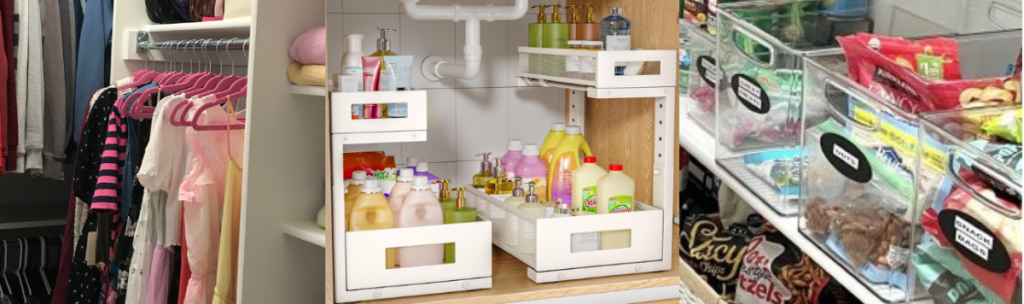
Best Organization Tools: My Favorite Products & Some to Avoid
Having organized the homes of hundreds of clients over the years, I know which home organizing products truly work and which ones to avoid. This post highlights the most functional products I consistently use and trust.

How to Declutter Your Wardrobe (And Skip the Seasonal Switch!)
By decluttering consistently, you will save yourself an enormous amount of time and energy by not having to rummage through seasonal clothing and move it in and out of your bedroom every time a new season rolls around.
0 Comments