
CLOSETS & BEDROOMS | Decluttering
10 Things to Ditch if You Want to Declutter Your Closet Fast
This post may contain affiliate links. I may receive a commission, at no cost to you, when you choose to use the links provided. See my privacy policy for more information.

If you are tired of constantly looking for lost items in your closet and are fed up with being up to your eyeballs in clutter, this post will help you declutter your closet fast by ditching these unnecessary items.
Having organized a plethora of cluttered closets over the years as a professional organizer, I’ve noticed that the same problematic items pop up again and again in nearly every closet job that I organize.
I usually remove these things. They look messy and make a closet less functional. They also make it hard to find things when you need them. Simplify your closet by getting rid of these items that take up too much space by living there.
Here are 10 common items to ditch to declutter your closet fast:
1. “Someday Clothing”.
“Someday clothing” is clothing that either does not fit or is out of style (but you’re hoping they will come back in style). They take up valuable prime real estate and create mental fatigue every time you look for clothing you’re actively wearing now.
I recommend donating clothing that doesn’t fit, but if you feel that you just can’t part with it, at least get it out of your closet and out of the way. Store them in a box or plastic tote somewhere else.
2. Mismatched Hangers, Dry Cleaner Bags and cheap Wire Hangers.
Nothing makes a closet look more chaotic than a jumble of unmatched, tangled wire hangers. Switch to uniform hangers, whether they be plastic or velvet Hangers (my favorite). I don’t usually recommend the bulky wooden hangers in women’s closets because they take up too much space on the rod and are better for men’s heavier clothing. Women’s wide-necked clothing also tends to slip off the wooden hangers.
Remove the dry cleaner bags from your clothing once you get them home. Leaving them in bags over a long period of time can discolor your clothing. They need to be able to breathe. If you want to protect seldom-worn occasional clothing, use breathable garment bags instead.
3. Shoeboxes (Empty or Not).
People often keep the empty shoeboxes “just in case” they return the shoes or want to resell them. However, boxes of various sizes and colors look messy, attract dust (and silverfish), and prevent you from actually seeing the shoes you own.
Rather than storing your shoes in mismatched shoeboxes, store them in clear shoe containers. This will make your closet look more uniform and help you to see and find the right shoes when you need them.
Better yet, keep your shoes out of boxes for easy access and visibility, and use a sturdy shoe rack to keep them organized instead.

4. Space-Hogging Seldom-Worn (or Never) Specialty Occasion Wear.
Bridesmaid dresses, tuxedos, and Halloween costumes that are worn once every five years or less do not need to be hanging in your closet. These items get in the way when trying to find other things and are better off in garment bags in a secondary storage area.
If you don’t wear these items at all, consider donating them or at least place them in plastic keepsake totes and store them elsewhere.
5. “Transitional Clothing” Piles
Transitional clothing is items that you only wear for a few hours and will likely wear again before you launder them. They are not clean, but they’re not really dirty either. Everyone seems to struggle with what to do with these in-betweeners.
Instead of tossing them on the floor, designate a shelf inside your closet specifically for transitory clothing. Leave the shelf empty so that you’ll always have room to place these items.
This is the one shelf in my closet I allow to be messy. If, after a week, you have not worn the items living there, take the time to clear off your shelf. Either throw them in the laundry or hang them back up.
6. Keepsake Clothing, T-Shirts, and Other Sentimental “Artifacts.”
High school letterman jackets, old concert tees, or a deceased relative’s sweater often live in the closet. While these are meaningful, they aren’t as much “clothing” as they are keepsakes. Moving them to a keepsake box and storing them elsewhere frees up space.
7. Uncomfortable Shoes
Many closets are weighed down by beautiful shoes that are never worn because they cause blisters or discomfort. If you haven’t reached for them in a year because they “hurt too much,” it’s time for them to go.
Life is too short to wear uncomfortable shoes. You know you’re always going to choose that other “more comfortable” pair when given the choice. These days, I will always choose comfort over beauty.
8. Dirty Laundry
If you struggle with laundry landing on the floor of your closet only to live there indefinitely, put a stop to this habit by placing a large open-topped laundry basket in a convenient location in your closet. The easier you make it for yourself toss your clothing into a basket, the more likely you will use it.
9. Random Stuff Not Related to Clothing
Do you have items cluttering up your closet that should really be stored somewhere else? If you have limited space in your closet and wish you had more room for your clothing, take a critical eye to anything that you’re storing in there that is not actually related to clothing.
What things might make more sense to store elsewhere in your home? Examples that I see often are: paperwork (office), keepsakes and large suitcases(storage room or spare room), extra pillows, sheets, and blankets (linen closet).
10. Excess Tote Bags and Purses.
Tote bags seem to accumulate rapidly because we often get them for free. But you really only need so many. My clients often have too many of these and are reluctant to throw them away because they don’t want to be wasteful.
But why let them clutter up your closet if you don’t use them? Just because you get one for free doesn’t mean you’re obligated to keep it. Select a few of your favorites and let go of the rest, guilt-free.
Many women use one or two purses 95% of the time, but own six others that never or very rarely get used. The same goes here; it doesn’t make sense to let several unused items take up precious space in your closet. Keep your true favorites and donate the rest to somebody who will love and use them on a regular basis.
Conclusion:
At the end of the day, your closet should work for you, not against you. By making decluttering a priority, investing in functional organizing tools and avoiding products that don’t work, you can create a streamlined, organized closet.
It can be hard to let go, but I’ve seen firsthand how much lighter my clients feel once they clear out the “noise.” Trust me, you’ll thank yourself every morning when getting ready becomes a breeze!
Reclaim Your Home & Your Sanity – Virtually!
If you are tired of feeling overwhelmed by clutter and the thought of tackling your disorganized spaces fills you with dread, Virtual Organizing might be just what you need. Click below to learn more about how I can help.
TELL ME MORE!


About Laura
I am a Southern California turned small town, Midwest Mom. I am wife to Bruce and mom to my three girls.
Back when I first started my organizing journey in 2013, I had what I thought of as a dirty little secret. I have ADHD and although I am organized, and enjoy the process of sorting, and tidying. I knew that there were many others with ADHD who really struggled with staying organized. I had a case of imposter syndrome and mostly kept the fact that I had ADHD to myself. That is until I learned that there are other successful professional organizers who have also learned to compensate for their ADHD.
I eventually realized that my need for order and simplicity actually stems from having ADHD as a way to compensate for my short attention span. So my gifts and my challenges are all ironically tied together to create who I am, and I am able to relate to and help others as a result of this coping method that I have developed for myself.
I help women and moms with ADHD, but I also help those who struggle with clutter without having ADHD. Because simplicity and less clutter are always at the heart of staying organized, there is much overlap when it comes to finding solutions to clutter and disorganization.
I am dedicated to keeping my life as simple as possible and to helping others do the same by teaching them how to declutter their homes, simplify their lives, and manage their busy families better.
I have been helping others stay organized since 2013.
It is my deepest hope that you will find resources here that will bring you closer to living a simpler, more intentional, and more peaceful life.
Get My Free Decluttering Kickstart Kit

you may also like

7 Executive Functioning Skills Affected by ADHD (& How to Overcome Them)
The 7 Executive functions are cognitive processes that help us plan, organize, initiate tasks, manage time, stay focused, regulate emotions, and more.
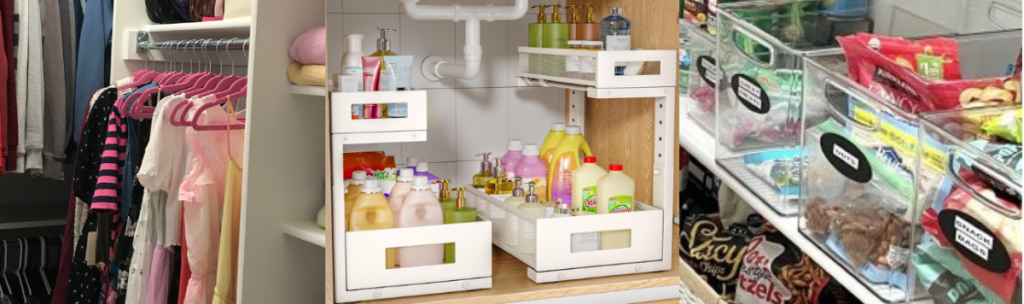
Best Organization Tools: My Favorite Products & Some to Avoid
Having organized the homes of hundreds of clients over the years, I know which home organizing products truly work and which ones to avoid. This post highlights the most functional products I consistently use and trust.
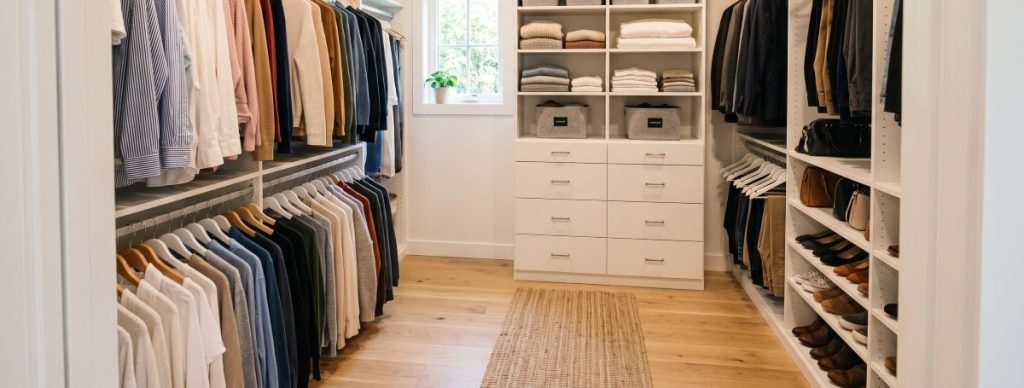
How to Declutter Your Wardrobe (And Skip the Seasonal Switch!)
By decluttering consistently, you will save yourself an enormous amount of time and energy by not having to rummage through seasonal clothing and move it in and out of your bedroom every time a new season rolls around.
0 Comments