
Decluttering | Mindfulness
8 Clutter Categories That Indicate Signs of Hoarding Tendencies
8 Clutter Categories That Can Indicate Signs of Hoarding Tendencies
These are the gateway clutter categories resulting from a “scarcity mindset” that can fuel the compulsion to save and can encourage hoarding tendencies:
A well-stocked pantry or craft room might seem innocent enough. And what harm is there in being frugal and conscientious about keeping things that might be useful down the line?
But if you have lost control of your pantry and don’t even know what’s in there, or your home is so crammed full of stuff that it is impossible to find things, your clutter-collecting habits may be affecting you more than you realize.
There is something else to consider besides the frustration it causes, the peace it steals, and the time wasted looking for things. These gateway habits can evolve and grow into daily behaviors that can be signs of hoarding tendencies.
It is normal to accumulate things as we age; we all do it, whether for practical use, sentimental value, or to bring beauty to our homes. However, for some, this natural tendency can sneakily slip into a more challenging pattern of clutter-collecting behavior.
Actual Hoarding Disorder is a mental disorder characterized by the extreme difficulty of getting rid of possessions—even those of little or no value. In contrast, hoarding tendencies are less severe. They don’t usually involve the same level of distress or functional impairment, but can still result in a living environment that is substantially cluttered.
Certain categories of clutter are more dangerous than others, and they become the slippery slope that can lead to bigger problems down the road.
The following clutter culprits are the most common gateway categories I see that are sometimes signs of hoarding tendencies:
1. Clothing
I have spent time in lots of overstuffed, messy closets over the years. Those who own large amounts of clothing tell me that they have to keep it all because they “might wear it someday,” or they’ll “lose weight and eventually wear them again.”
The Risk: Closets overflow and become less functional, and chairs and other furniture become piled high with clothing. In some cases, multiple closets in the home are needed to store all the excess clothing, making it hard to find things. Some don’t even use their closet and end up dressing out of a laundry basket instead.
2. Craft & Hobby Supplies
I often work with creative clients who tend to overshop and stock up on supplies. Having too many craft projects going at the same time can also contribute to craft room clutter.
Creative individuals often have inspiring ideas, but these ideas require a certain amount of time and energy to become a finished product. So many projects are never actually completed.
The Risk: Multiple unfinished projects and the supplies needed for proposed craft projects that are never completed can create craft room clutter to the point that it is impossible to work in that space.
3. Boxes, Packaging, Shopping Bags, and Plastic Food Containers
I frequently encounter piles of empty boxes, entire cuboards full of wadded up plastic and canvas grocery bags, and multiples of empty plastic food containers cluttering countertops and cabinets.
These things are kept based on the belief that they might be useful in the future. While many may consider these items to be trash, others keep them in an effort to be frugal. Overly conscientious recycling and disposal habits can also become a barrier to getting rid of trash.
The Risk: If too many of these products are collected, they may take over your space. Piles of plastic recyclables, glass bottles, cardboard, and paper products litter kitchens, making them look cluttered and messy. They also make spaces feel and look messy and quite literally…trashy.

4. Collectibles
There is nothing wrong with having the desire to collect certain items. Items are often kept due to strong emotional attachment, monetary value, or the desire to complete a set. Collecting can be a source of joy and entertainment.
The challenge arises when the desire to collect is so strong that a person accumulates too large a collection or several different collections that take over and make a space look more like a store than a home.
The Risk: Collections outgrow display areas, taking over entire homes. Rooms look stuffy and cluttered, and the items end up dusty and unappreciated.
5. Food
You would be shocked at how much expired food I have tossed out over the years. Motivated by a fear of scarcity, having to go without, or a desire to save money and be prepared for all emergencies, I have experienced my share of chaotic pantries bursting at the seams.
It certainly does not help that bulk food stores like Cosco and Sam’s make buying items in large quantities so hard to resist. These stores proclaim that you will save money by purchasing their super-sized products, which is not always true after doing the math.
The Risk: Pantries become disorganized, less functional, and crammed with duplicate and expired items. Too much food also leads to storage overflow into non-kitchen areas, making it hard to remember what you have and impossible to find things. It also significantly raises your risk of ending up with expired food on your hands.
6. Medications, Toiletries, and Cleaning Supplies
Because they are non-perishable, my clients often load up on paper towels, toilet paper, and other bulky paper items. Medications and cleaning supplies are also stocked up on. Similar to above, they want to be prepared for everything and anything that might be needed, so these items are purchased in surplus.
The Risk: Bulky items like paper towels and toilet paper take up an enormous amount of space. Bathrooms, laundry rooms, and other storage areas end up stuffed, cluttered, and disorganized. Things are stored in so many different places that when you need a specific item, you can’t find it. Medications and other toiletries expire before you can use them.

7. Organizing Products
Shopping can be the easiest and most enjoyable part of getting organized. However, if you shop first, you run the risk of losing your motivation to complete the task. Once you lose interest, the organizing products you purchased will only contribute to the clutter you already have! I see this all the time; in fact, it is one of the most common organizing mistakes that I see.
The Risk: Piles of unused empty bins and other organizing products end up adding to the clutter in your home. Money ends up being wasted on products that are not the right fit or size for what you actually need once an organizing project is completed.
8. Sentimental Items
For some of my clients, sentimental items hold such powerful energy that they cling tightly to the objects associated with them. This is especially true if it reminds them of a lost loved one or represents a great achievement. Each item holds a cherished memory. This can make letting go feel like they are discarding a part of their past.
The Risk: Holding on too tightly can not only clutter our physical space but can also keep us tethered to yesterday instead of embracing today.
The Compounding Effect
A person who is dealing with just one of these eight clutter categories might still manage to stay fairly organized. However, those who can relate to several of these categories are likely to encounter more complex clutter challenges.
Could a ‘Scarcity Mindset’ be contributing to your clutter?
A scarcity mindset is that nagging belief that resources like time, money, or opportunities will never quite be enough. It keeps your attention fixed on what you lack instead of what you already have.
This belief often makes us cling too tightly to things in our homes, and it usually stems from old experiences or childhood lessons about struggle. It’s the complete opposite of believing in abundance.
The beautiful thing? You can absolutely shift this pattern!
Here are three simple ways to move toward abundance:
- Practice Gratitude Daily. This is the best antidote to focusing on lack. Start listing three to five specific things you’re grateful for each morning or evening. It forces your brain to see the resources you already possess.
- Define Your Own “Enough.” Scarcity loves moving the finish line. Decide what sufficiency truly looks like for you, especially with your possessions. Abundance is simply realizing you’ve already reached your goal.
- Recognize the Fear. Understand that anxious thoughts about “not enough” are often just old, well-worn neural pathways, not current facts. Becoming aware of these old beliefs is the vital first step in pushing back and choosing peace instead.
Conclusion:
By recognizing these 8 gateway clutter categories, you can address the scarcity mindset that very well may be fueling them. Simply gaining insight into how your mindset, underlying beliefs, and habits may be contributing to your clutter can help you move forward.
Shifting your thinking from fear to abundance can also help you prevent these small collecting habits from evolving into more challenging hoarding tendencies.

Overwhelmed With Clutter? Get My Free Decluttering Kick-Start Kit and Start Making Progress Today!


About Laura
I am a Southern California turned small town, Midwest Mom. I am wife to Bruce and mom to my three girls.
Back when I first started my organizing journey in 2013, I had what I thought of as a dirty little secret. I have ADHD and although I am organized, and enjoy the process of sorting, and tidying. I knew that there were many others with ADHD who really struggled with staying organized. I had a case of imposter syndrome and mostly kept the fact that I had ADHD to myself. That is until I learned that there are other successful professional organizers who have also learned to compensate for their ADHD.
I eventually realized that my need for order and simplicity actually stems from having ADHD as a way to compensate for my short attention span. So my gifts and my challenges are all ironically tied together to create who I am, and I am able to relate to and help others as a result of this coping method that I have developed for myself.
I help women and moms with ADHD, but I also help those who struggle with clutter without having ADHD. Because simplicity and less clutter are always at the heart of staying organized, there is much overlap when it comes to finding solutions to clutter and disorganization.
I am dedicated to keeping my life as simple as possible and to helping others do the same by teaching them how to declutter their homes, simplify their lives, and manage their busy families better.
I have been helping others stay organized since 2013.
It is my deepest hope that you will find resources here that will bring you closer to living a simpler, more intentional, and more peaceful life.
you may also like

7 Executive Functioning Skills Affected by ADHD (& How to Overcome Them)
The 7 Executive functions are cognitive processes that help us plan, organize, initiate tasks, manage time, stay focused, regulate emotions, and more.
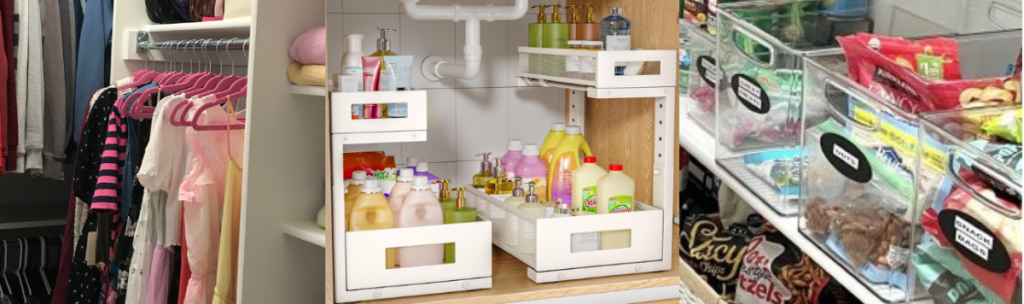
Best Organization Tools: My Favorite Products & Some to Avoid
Having organized the homes of hundreds of clients over the years, I know which home organizing products truly work and which ones to avoid. This post highlights the most functional products I consistently use and trust.

How to Declutter Your Wardrobe (And Skip the Seasonal Switch!)
By decluttering consistently, you will save yourself an enormous amount of time and energy by not having to rummage through seasonal clothing and move it in and out of your bedroom every time a new season rolls around.
0 Comments