
Decluttering
Why Letting Go of Sentimental Clutter is so Hard
Why Letting Go of Sentimental Clutter is so Hard, and How to Get Past it.
Whenever a client has a large amount of decluttering to do, I advise them to hold off on keepsakes and sentimental items until the end of their decluttering journey. That’s because letting go of sentimental clutter is the hardest category to deal with.
For one thing, sentimental items carry the heaviest emotional weight. Guilt, memories and emotions can make deciding what to let go of hard. And since we end up walking down memory lane with every item we look at, progress can be slow. I created this post as a guide to help you decide what to do with sentimental clutter so you don’t get stuck and give up altogether.
The Weight of Memories: Why Letting Go of Sentimental Clutter is so Challenging.
For some, memories hold such powerful energy that we cling tightly to the objects associated with them. While it’s natural to cherish reminders of our past, holding on too tightly can not only clutter our physical space but also keep us tethered to yesterday instead of embracing today.
This can be especially challenging for those of us who are exceptionally sentimental. If you also happen to have ADHD, this adds another layer of difficulty. I often remind my clients that memories live in our hearts, not in objects. A common fear is that letting an object go means forgetting the memory associated with it. But trust me, your most cherished memories are ingrained within you, far more deeply than any material possession can hold.
Sometimes, our Identity is Tied to our Sentimental Keepsakes.
Do you still have all of your college books, even though you graduated 20 years ago, and that content has been out of date for eons? Keepsakes that are connected to our past achievements or our identity can be hard to part with because we fear that if the items disappear, so will the achievements.
Although this is obviously not realistic, it still feels real. So our tendency is to cling to those things that validate our past victories. Just being aware of this inclination can help you step back, realize your achievements are not going anywhere, and move past the false fear of letting go.
Set Limits For Yourself
Before you begin sorting through keepsakes, sentimental items, or inherited belongings, it can be incredibly helpful to set a limit for yourself. You could choose a specific container—a keepsake box, plastic tote, a drawer, or even a small shelf—and let that container guide you on how much you will keep. Then, select your absolute favorite items that fit within that boundary and let the rest go. You can also take photos of things that don’t fit in the box. Deciding how much is “enough” beforehand will give you a firm ground to stand on when emotions run high.
Letting Go of Sentimental Clutter Inherited From Others
If you’ve inherited keepsakes from loved ones who have passed, hold onto them if they bring you happiness and don’t consume too much space. But please, don’t keep them out of guilt. It’s easy to hold onto things that lack personal value simply because we imagine Grandma or Aunt Edna would be disappointed if we let them go.
Why would your loved one want you to hold onto something you don’t truly want? I firmly believe that while we live in a material world, our loved ones are in a place beyond material attachments. Again, the love you have in your heart for them and the memories you created together are all that truly matter now. As the biblical quote beautifully puts it, “While all things in this world will pass, our love goes on forever.” (1 Corinthians 13:8).
Decide for yourself how each keepsake makes you feel. If an item does nothing for you, consider letting it go to a new owner who will treasure it and give it the love it deserves. Your loved one certainly would not want you to be burdened with a cluttered home.

More Stuff Does Not Equal More Love
Perhaps you have been holding on to sentimental clutter from a loved one, who was a quilter, crafter, or painter, like my mom was. If you still have 40 of your loved ones’ quilts, know that even if you keep just one or two, you’re honoring and loving her just the same.
My mom created many beautiful paintings. I have my two favorites hanging in my home, while the rest have been happily rehomed with family members and friends. My personal favorite is a vibrant beach scene that hung in our bathroom for most of my childhood and now brightens my own bathroom today.
It’s also important to note that the few items you decide to keep will actually gain more value than the other 40 had before you let go of them. This is because what’s left becomes cherished heirlooms, whereas a burdensome giant pile of your loved ones’ things will only take up too much room in your home and weigh you down.
I love Joshua Fields Millburn’s quote, “I don’t need Mom’s stuff to remind me of her—there are traces of her everywhere: in the way I act, in the way I treat others, even in the way I smile.”
What to do With Extra Sets of Dishes.
Nearly every home I visit has at least one extra set of dishes, often inherited from a mother or grandmother. If you don’t love the entire set but want to honor your mom or grandma, consider keeping just the sugar and cream cups. Now you have a keepsake of her, but it will take up a fraction of the space. If you want more ideas, I have written a whole post on what to do with inherited China.

Let Go of Sentimental Clutter That Brings You Down
Keepsakes should evoke joy, not sadness. I once worked with a client who, years after a tragic accident, still held onto the outfit the family member was wearing on that devastating day. While I empathized with her immense pain, that outfit served only as an agonizing reminder of the tragedy. This illustrates why letting go of sentimental clutter that brings pain is so essential.
Look at the keepsakes you’re holding onto and pay attention to how each item makes you feel. If an item doesn’t trigger warm feelings, happy memories, or a smile, it’s might be time to say farewell. Why punish yourself with things that bring you down? Life is simply too short for keeping that kind of emotional clutter.
Navigating Loss: Releasing a Loved One’s Belongings
A deeply challenging category of keepsakes involves the personal belongings of a loved one who has passed away. The fear here is often that letting go means forgetting the person we’ve lost. But this simply isn’t true. Objects don’t possess the power of our memories or the love in our hearts. A material thing can never measure up to the depth of our emotional connection. This is a crucial understanding when letting go of sentimental clutter tied to grief.
I often work with clients who are facing the immense task of sorting through a loved one’s extensive belongings. My role extends beyond helping them decide what to keep and what to let go of; I also serve as a steady anchor during an incredibly emotional process. Tears are common, but there’s strength in working together to make this daunting task more manageable.
I recall working with a woman who had lost her husband to illness several years before we met. As we tackled various spaces in her home, it became clear she was still holding onto most of his things. Their home was significantly cluttered, and his belongings were spilling out of storage spaces into the living areas, leaving little room for her and her children to function properly.
The most unfortunate aspect was how tightly this situation tethered her family to the past. She feared they would forget him if they let go of his possessions. Yet, his belongings were actually interfering with their healing process and their ability to move forward. I helped her see that releasing his things wouldn’t diminish their memories but would instead allow her family to engage more personally and presently in their lives today.
Eventually, she was able to let go of many of his belongings, keeping only the few items that she and her children cherished most. Not surprisingly, those chosen items increased in sentimental value, becoming even more special than they were before.
You’re Not Required To Be The Keeper of Other People’s Memories
My mother meticulously assembled several photo albums of trips she took with her friends. I’m certain she spent hours on them, and they brought her immense joy. However, since I didn’t know any of the other ladies in the photos and wasn’t on those trips, the albums weren’t special to me.
They were her memories, not mine. I kept the albums for a while, but I knew in my heart that my mother wouldn’t have expected me to keep them, and I eventually let them go. These kinds of sentimental keepsakes are hard to let go of, but you should not feel guilty about letting them go.
Finding Closure in The Process
Committing to going through your keepsakes and inherited items and reducing them to a manageable amount can be incredibly liberating. In fact, for many, just the process of sorting through sentimental items one piece at a time can be an effective and therapeutic way of revisiting the past one last time, ultimately bringing a sense of closure. This can be a vital step in letting go peacefully and moving forward.
I have also written a post on what to do with all the framed family keepsake photos that you may have stored in a closet or basement, collecting dust and stealing precious storage space. It offers tips on how to protect your photos and store them so that they take up less space. I encourage you to check it out if this is a problem for you.


About Laura
Who I am is a Southern California turned small-town, Midwest Mom. I am wife to Bruce and mom to my three girls. I am also dog mom to Ollie and Gracie.
Back when I first started my professional organizing journey in 2013, I had what I thought of as a dirty little secret. I have ADHD and although I am organized, and enjoy the process of sorting, and tidying. I knew that there were many others with ADHD who really struggled with staying organized. I had a case of imposter syndrome and mostly kept the fact that I had ADHD to myself. That is until I learned that there are other successful professional organizers who have also learned to compensate for their ADHD the same way that I have.
I eventually realized that my need for order and simplicity actually stems from having ADHD as a way to compensate for my short attention span. So my gifts and my challenges are all ironically tied together to create who I am, and I am able to relate to and help others as a result of this coping method that I have developed for myself.
With a B.A. degree in Psychology, I have several years experience working with families and seniors. I believe in a holistic view to organizing. Clearing our minds of the clutter and chaos in our lives is just as important as clearing our physical clutter. By taking a holistic approach to organizing, we can make lasting change.
I also help those without ADHD, who struggle with too much clutter. Because simplicity and less clutter are always at the heart of staying organized, there is much overlap when it comes to finding solutions to clutter and disorganization.
I am dedicated to keeping my life as simple as possible and to helping others do the same by teaching them how to declutter their homes, simplify their lives, and manage their busy families better.
I have been helping others stay organized since 2013.
It is my deepest hope that you will find resources here that will bring you closer to living a simpler, more intentional, and more peaceful life.
Overwhelmed With Clutter? Get My Free Decluttering Kick-Start Kit and Start Making Progress Today!

Feeling Stuck?
Schedule a coaching call, virtual organizing session, or a home assessment with me, and get the support and encouragement you need to move forward.

you may also like

7 Executive Functioning Skills Affected by ADHD (& How to Overcome Them)
The 7 Executive functions are cognitive processes that help us plan, organize, initiate tasks, manage time, stay focused, regulate emotions, and more.
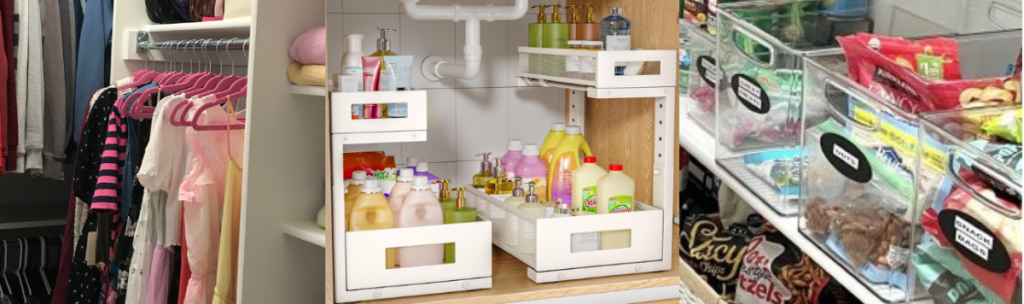
Best Organization Tools: My Favorite Products & Some to Avoid
Having organized the homes of hundreds of clients over the years, I know which home organizing products truly work and which ones to avoid. This post highlights the most functional products I consistently use and trust.

How to Declutter Your Wardrobe (And Skip the Seasonal Switch!)
By decluttering consistently, you will save yourself an enormous amount of time and energy by not having to rummage through seasonal clothing and move it in and out of your bedroom every time a new season rolls around.
0 Comments